The below is our view, not legal, tax or accounting advice and should not be relied upon as such.
About the author:
Jamie Milroy is Founder and CEO of DASH, the FCA-authorised Cycle to Work platform used by organisations including the Financial Times, Deliveroo, Lovable and several NHS trusts. A chartered accountant (ACA, ICAEW) by training, formerly of PwC, he leads DASH's work on Cycle to Work, salary sacrifice and the tax treatment of employee benefits and remuneration. He is a member of Reward Strategy's Partner 75, recognising excellence within the pay and reward industry, speaks regularly on Cycle to Work and employee benefits, and has been quoted in outlets including The Times and City AM.
Introduction
The Cycle to Work scheme covers more than just buying a bike. Bike share and e-bike subscriptions qualify too, and this article explains why. Section 244 of the Income Tax (Earnings and Pensions) Act 2003, the law behind Cycle to Work, does not require an employee to own a bike. In fact, it requires the opposite: one of its three conditions is that “there is no transfer of the property in the cycle” to the employee. Nor does it require them to use the same bike each time. HMRC's own guidance specifically covers bike-share schemes, so the bikes and e-bikes of operators such as Lime, Forest and Santander Cycles can be provided through the scheme. An e-bike subscription that never passes ownership to the employee fits the law at least as well as a traditional hire, if not better.
The reason why the question comes up at all is because one model has dominated the market for so long that it is often mistaken for the rule: the employee hires a bike for 12 months through salary sacrifice, then buys or keeps it at the end. It is for this reason that the scheme is often mistakenly described as a way to buy a bike, a point we cover in the guide to running an HMRC-compliant Cycle to Work scheme. Neither the 12-month term nor any subsequent purchase comes from the legislation. Nor does HMRC’s 12-month threshold for salary sacrifice, at EIM42767, stand in the way of a monthly subscription or bike share. It exists to stop a benefit being taxed as money’s worth, and HMRC confirms at EIM42760 and EIM42755 that this can’t happen with cycles.
On ownership, the law and the guidance go further than most people expect. Section 244 requires that there is no transfer of the property in the bike, and the Department for Transport's guidance adds: "There must be no option, whether express or implied, as part of, or alongside the initial hire agreement for the employee to purchase the cycle or equipment at the end of the hire agreement." As such, buying ownership of, or title to, the bike is not part of the scheme at all.
What the law does require is set out in three conditions and one definition. This article takes each in turn, applies it to subscriptions and bike share, using DASH's products as the worked example, to explain why both qualify.
What counts as a cycle
Section 244 takes its definition of a cycle from section 192(1) of the Road Traffic Act 1988: "a bicycle, a tricycle, or a cycle having four or more wheels, not being in any case a motor vehicle". The last words are the ones that matter for e-bikes.
An electrically assisted pedal cycle is not treated as a motor vehicle if it meets the rules on GOV.UK. It "must have pedals that can be used to propel it", a motor with a "continuous rated power" of no more than 250 watts, and a motor that "must not be able to propel the bike when it's travelling at more than 15.5 miles per hour". HMRC's guidance confirms that "Electrically assisted pedal cycles (EAPCs) are covered by the exemption" (EIM21664).
The exemption also covers cyclist's safety equipment, which the legislation does not define. The Department for Transport's guidance gives a suggested list at paragraph A.5 of its Annex A. The lock included with every DASH subscription is on it by name: "Locks and chains to ensure the cycle can be safely secured", as is the helmet: "Cycle helmets which conform to European standard BSEN1078".
Condition A: no transfer of ownership
Condition A is that "there is no transfer of the property in the cycle or equipment in question". Subscriptions and bike share meet it more simply than any other model, because they are the closest fit to what the legislation describes: the provision of a cycle, with no transfer of ownership at any point.
- Subscription: the bike remains the provider's throughout. When the subscription ends, the bike goes back. There is nothing to buy and no end-of-hire fee.
- Bike share: the employee never holds title to any bike. The bikes stay in the operator's fleet, and access simply ends when the arrangement does.
A traditional hire meets the same condition, but it has to manage what happens at the end. The DfT guidance is strict here. The initial agreement must not include an option to buy, and any later sale must be "entirely discretionary at the time", under a separate agreement and at a fair value. For a subscription or bike share, that question just never arises.
Condition B: main use for qualifying journeys
Condition B is that "the employee uses the cycle or equipment in question mainly for qualifying journeys". Qualifying journeys are the same as for the works bus exemption: broadly, journeys between home and a workplace, and between workplaces (EIM21850). We cover qualifying journeys in more detail in a separate explainer.
For bike share, the most common concern we hear around this is that the employee uses a different bike each time, which is felt to somehow breach the scheme's requirements. Helpfully, HMRC has answered this exact point directly. Where a cycle is provided "via membership with a bicycle share scheme or via a pool bike arrangement", "'cycle' should be taken to mean any cycle used under the scheme" when deciding whether it is used mainly for qualifying journeys (EIM21664). The test therefore looks at the employee's use of the scheme as a whole, not at any one bike. For the avoidance of doubt, this means you could use a Lime bike to work in the morning, a Forest bike home in the evening and a Lime bike to the shops at the weekend. Two of the three journeys are qualifying, so taken together the use is mainly for qualifying journeys.
In any case, the evidence sought is light for every type of scheme and it's a rare case where HMRC starts from the assumption that you comply. "Employees are not expected to keep detailed records of time spent cycling or miles travelled", and HMRC's instruction to its own officers is to "accept that the test is satisfied unless there is clear evidence to suggest that less than half of the use" is on qualifying journeys. Other use, such as at weekends, does not affect the exemption "provided that the other use is not the main use".
As with any other Cycle to Work hire, the employee also makes a declaration in the hire agreement and/or salary sacrifice election to use the scheme mainly for qualifying journeys.
Condition C: available generally
Condition C is that cycles are "available generally to employees of the employer concerned". HMRC is clear that "this does not mean that every employee has to be provided with a bicycle or equipment". The offer must be "open to all employees if they wish to take it up" (EIM21664).
Two points in HMRC's guidance matter for subscriptions and bike share. First, "there is no requirement for them to be offered on exactly the same terms and conditions", so a scheme can offer employees a choice of products. Second, the condition is about the offer of cycles, not how they are paid for. HMRC says salary sacrifice "in itself has no direct relevance to the application of the exemption in section 244 ITEPA 2003".
What a subscription includes, and why none of it is a separate benefit
A bike or e-bike subscription bundles several things into one convenient monthly charge. The natural question that follows: is every part of it within the exemption? Section 244 covers cycles and cyclist's safety equipment, not anything else an employer chooses to bundle with them. If an employer added gym membership, for instance, to a Cycle to Work subscription, that part would be a separate taxable benefit.
Taking DASH's subscription as the example, each part is either squarely within the exemption or, in our view, part of the hire itself:
- The bike or e-bike: a cycle hired to the employee by DASH, within section 244.
- The lock and helmet: cyclist's safety equipment, from the DfT's suggested list.
- Maintenance and repairs: DASH as owner looking after its own bike. The employee benefits from a bike that works, but the maintenance is part of the hire, not a separate service to them. Replacement parts are also on the DfT list: "Replacement parts to keep a cycle roadworthy".
- Theft cover: DASH insures the bike as its owner. The cover protects DASH's asset, so the employee's benefit, a replacement bike after a theft, is incidental to it. A policy taken out for the employee, in their own name, by their employer would be a separate taxable benefit, however.
As the above hopefully demonstrates, the analysis does not and should not depend on what the bundle is called. What matters is who owns the bike, who is insured, and whether each item is a cycle, safety equipment, or the owner looking after its asset.
How bike share is provided through a scheme
HMRC's guidance supports bike share being delivered in two ways. EIM21664 refers to cycles provided through membership of a bike-share scheme, and separately says that "The exemption also covers the provision of a voucher for hiring bicycles and equipment."
In practice, a scheme can therefore provide bike share in one of two forms:
- A named operator: the employee gets access to one operator's bikes and e-bikes for a monthly price, under a hire agreement like any other Cycle to Work hire.
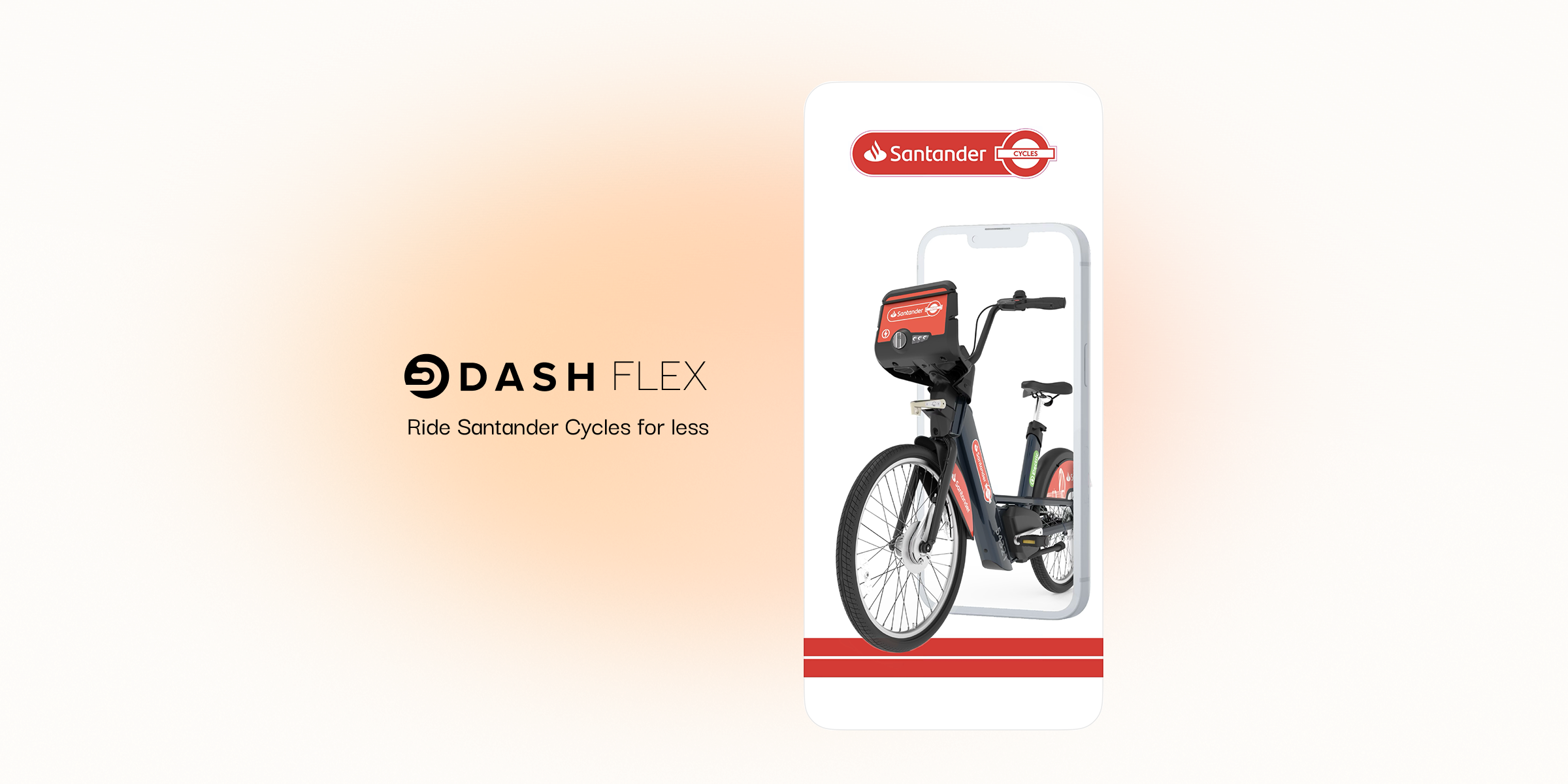
- Several operators at once: DASH Flex works this way. For a fixed monthly payment, the employee can use bikes and e-bikes from operators including Lime, Forest, Voi, Beryl and Santander Cycles. Importantly, it can be used only for bike and e-bike hire.
The advantage of the latter structure is that it more closely mirrors how people use these services normally: using whichever provider is more convenient for each ride.
Either way, the arrangement ends cleanly. When it stops, the employee's access stops, and there is nothing to return or buy.
Paying for it, including where the minimum wage applies
Most employees pay through salary sacrifice, which is where the income tax and National Insurance savings come from. But salary sacrifice is just one way the scheme can be paid for, not what makes it qualify. Section 244 attaches to the provision of the cycle, however it is paid for.
That matters most for lower earners, as salary sacrifice cannot take an employee's pay below the National Minimum Wage. Where it would, the same hire can be paid from net pay or directly. The employee loses the tax and NI saving on those payments, unfortunately, but the product is still provided under the scheme.
Subscriptions and bike share are particularly helpful here as their monthly costs can be much lower than a traditional Cycle to Work transaction for an equivalent bike or e-bike. This opens the door to more employees being able to use salary sacrifice without coming up against the minimum wage barrier at all. At DASH Cycle to Work, our aim is to get more people cycling, so widening who can benefit matters to us a lot.
Conclusion
Overall, contrary to popular belief, the exemption in section 244 does not require an employee to buy a bike (quite the opposite), keep the same bike, or commit to a 12-month hire.
HMRC's guidance expressly contemplated and covers bike-share schemes, with some foresight given how much operators such as Lime, Voi and Forest have since grown demand. And a subscription that never transfers ownership meets the ownership condition more simply than a traditional hire does.
Subscriptions and bike share still have to meet the same conditions as any other Cycle to Work transaction: they must provide cycles or safety equipment, be used mainly for qualifying journeys, and be available generally to employees.
Where a scheme does not offer subscriptions or bike share, that is a choice of model, not a requirement of the law. For an employer, the more useful question to ask is which model reaches the most of its workforce, or, better still, why choose between them at all when one provider can offer every model.